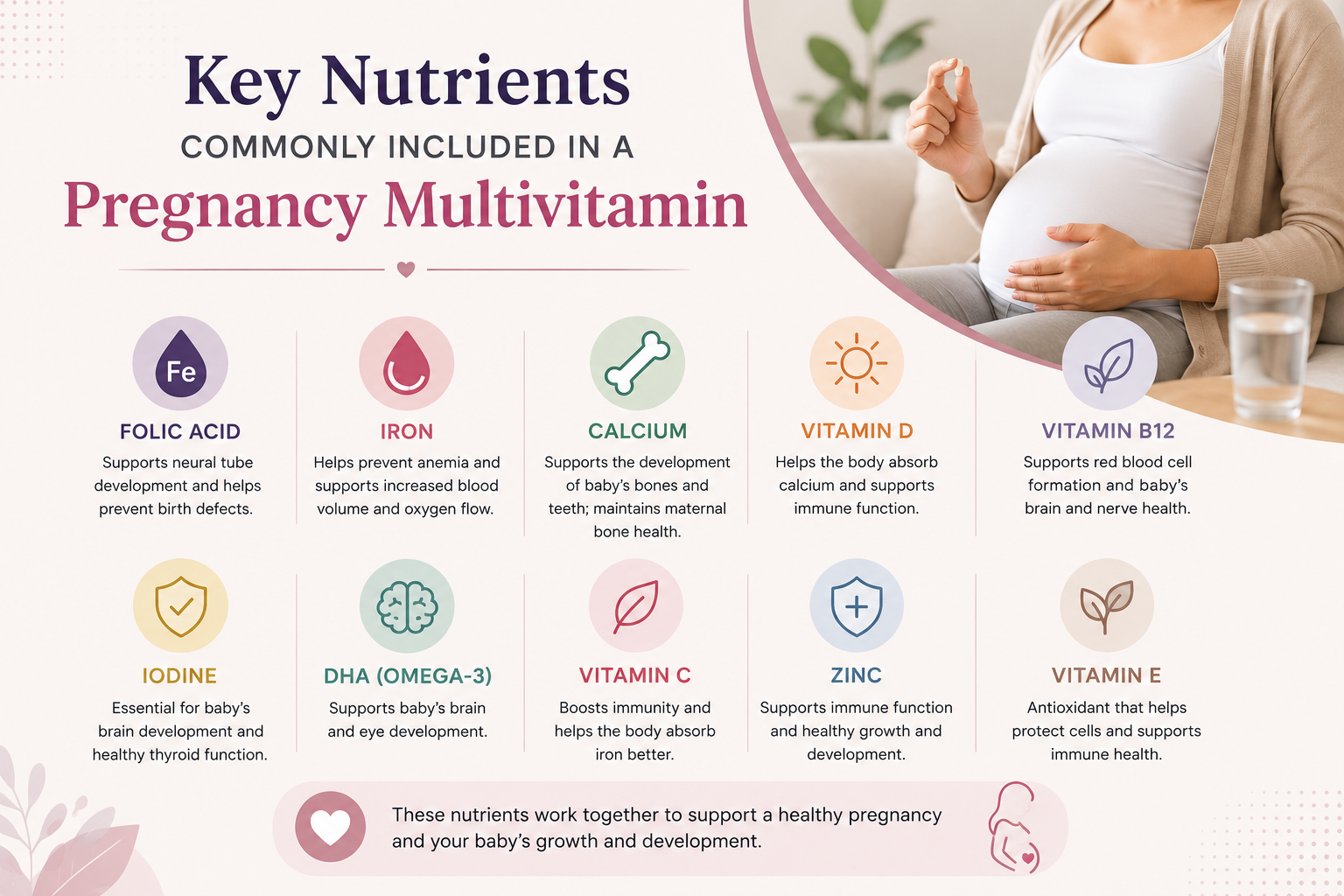
Key Nutrients Commonly Included in a Pregnancy Multivitamin

Many people pay more attention to their diet during pregnancy as it is an important factor in health. An all-over diet containing different types of whole foods, which are thought to provide a good balance of nutrients, is often advocated. In addition to following a healthy eating plan, some women may supplement their nutrition with other products, like a pregnancy multivitamin as well.
Vitamins and minerals – which are commonly mentioned in pregnancy nutrition advice – are often present in these products, which can be a mixture of different vitamins and minerals. By developing an awareness of the part these nutrients play and where they are actually located in food, these individuals can take decisions that will ensure obtaining the right amount of nutrients each day.
Why Nutrient Intake Matters During Pregnancy
Vitamins and minerals should continue to be provided via diet and nutrition throughout pregnancy. Vegans should aim to get a balanced diet with vegetables, whole grains, protein sources and healthy fats to avoid this.
These are the nutrients that are usually recommended during a pregnancy:
- Folate
- Iron
- Iodine
- Calcium
- Vitamin D
- Omega-3 fatty acids
- B-group vitamins
Often these nutrients are part of the general dietitiqs advice, and can be available in foods and supplement products.
Folate
The B-vitamin folate is certainly one of the most talked about and studied nutrients during pregnancy. Asides from its multiple uses to stimulate normal cell division it is also present in some foods, including:
- Leafy green vegetables
- Lentils and legumes
- Citrus fruits
- Whole grains
Folate is frequently in many formulation of dietary supplements because the amount in the food may change.
Iron
Iron is important for the production of red blood cells and for transport of oxygen in the body. Iron-rich foods include:
- Lean meats
- Leafy greens and spinach.
- Beans and lentils
- Fortified cereals
Another nutrient found in a pregnancy multivitamin and that plays a part in daily nutrition is iron.
Iodine
Iodine is a mineral in the body that’s needed for proper thyroid function and is quite a regular factor in recommendations for pregnant ladies eating.
Iodine gets into the body from foods, such as:
- Dairy products
- Seafood
- Eggs
- Iodised salt
The addition of iodine rich foods to a well balanced diet may be a part of the provision of nutrients.
Calcium
Ca2+ has been classically known as important for normal bone and teeth. It is an ingredient in food products like:
- Milk, yoghurt and cheese (from plants)
- Fortified plant-based alternatives
- Tofu
- Almonds
- Leafy greens
Calcium can also be contained in other vitamin and mineral supplements.
Vitamin D
Vitamin D is involved in the absorption of calcium and is quoted as a part of ‘usual diet’.
Some foods provide vitamins D, E include:
- Sunlight exposure
- Oily fish
- Eggs
- Fortified foods
There are also some nutrition products which contain vitamin D in combination with other nutrients.
Omega-3 Fatty Acids
DHA is one of the types of omega-3 fats that is always discussed with regards to a pregnant woman’s diet.
Food sources include:
- Salmon and sardines
- Chia seeds
- Flaxseeds
- Walnuts
Healthy fat can be part of a diverse diet or meal to maintain dietary balance.
Food First: Building Balanced Nutrition Habits
Routine consumption of whole foods continues to be key to nutrition intake. The diversity helps us to consume vitamins, minerals, fibre, protein and healthy fats, all of which contribute to our health and wellbeing.
Practicing positive behaviours can be helpful, such as:
- Eating regular meals
- Using vegetables throughout the day!
- Since whole grains are available where possible, it is recommended to select them.
- Staying hydrated
Regularly adding protein-rich foods to your diet.Eating foods that are good for protein throughout the day.
These are some healthy habits that can help maintain a healthy diet during pregnancy.
When People Explore Supplement Options
Others may not be able to get all nutrients from the food they consume and may need to supplement. Others may experience a fluctuating appetite and/or may have dietary restrictions or busy schedules that make it difficult to get all the nutrients from food. If these are considered, additional products to be provided to enhance dietary intake may be investigated.
When consumers look into nutrition products, they might also be interested in taking a general overview, like women’s health supplements, when they are seeking to take a certain product for general health throughout the day.
Supplements shouldn’t replace a balanced diet, they are used in conjunction with eating a balanced diet.
Understanding Labels and Ingredient Lists
When deciding on supplements to explore, some people prefer to compare:
- Ingredient forms
- Serving sizes
- Included nutrients
- Usage directions
- Product transparency
It may be helpful to carefully read the labels to make informed choices about products that are available.
Conclusion
A balanced diet including a well set of food in the right proportions is very significant to overall health while pregnant. Folate, iron, iodine, calcium and vitamin D are examples of nutrients that are highlighted as areas of concern in the diet and used in the formulation of supplements.
Some may consider a pregnancy multivitamin as a component of a comprehensive technique to balanced nutrient intake. Maintaining regular feeding patterns, eating a wide range of foods and making good food decisions can contribute to general long term good health.