What Safety Considerations Matter Most When Operating Trenching Attachments?

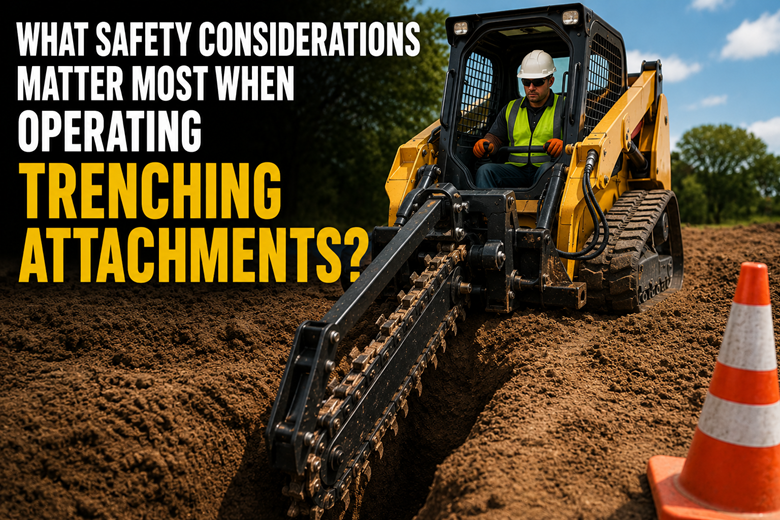
Trenched excavation is a core construction operation involved with utility installation, agriculture and infrastructure construction. Trenching attachments are essential tools for contractors to efficiently and accurately prepare sites for utility networks, whether installed underground cables, drainage systems, or other applications. But, there are also potential dangers associated with trenching that must be taken into account and equipment handled properly.
Attaching equipment like an excavator trencher and excavator auger can increase productivity, but operators need to be mindful of many safety precautions to reduce hazards and ensure safety during work. Knowing the critical safety factors for trenching equipment can minimize worker, equipment and project delays.
Why Trenching Safety Is Important
Trenching activities can create a number of hazards for a worker such as:
- Ground collapse
- Underground utility strikes
- Equipment rollover
- Flying debris
- Unstable terrain
These dangers can cause injuries, damage equipment and cause expensive project delays if not taken care of properly. These risks can be minimized and sites become more efficient through the use of safe operating procedures.
1. Conduct a Thorough Site Assessment
It is good practice to complete a thorough site inspection prior to the use of any trenching attachment.
Important factors to identify include:
- Soil conditions
- Ground stability
- Twisting roads and rough surfaces
- Existing structures
- Underground utilities
- Drainage issues
Knowing the conditions on site will enable operators to choose the right equipment and prevent any unanticipated dangers when excavating.
2. Locate Underground Services Before Digging
The most important safety aspect of trenching is the ability to locate utilities existing underground prior to the excavation.
These are just some of the potential services that could be underground:
- Electrical cables
- Water mains
- Gas pipelines
- Telecommunications lines
- Sewer systems
Accidentally striking underground infrastructure can result in severe injuries, service disruptions, and expensive repairs.
Use approved service locating procedures to confirm the location of utilities prior to operation of excavator trencher and excavator auger.
3. Use the Correct Attachment for the Task
There are various attachments used with different trenching and drilling applications.
For example:
- The excavator trencher is used to make narrow and continuous trenches.
- The purpose of an excavator auger is to drill holes with a specific precision for poles, fencing, foundations and utility installation.
The proper attachment helps to maximize efficiency and minimize unnecessary wear of equipment and operators.
Attachments should also be coordinated to the excavator hydraulic requirements and operating capacity to assure safe operation.
4. Inspect Equipment Before Operation
Regular equipment checks can prevent problems from becoming a problem.
Operators should check:
- Including hydraulic hose and fittings.
- Mounting systems
- Teeth and parts of the teeth that wear out during the cutting process.
- A condition that requires a continuous flow of chain along the trench.
- Auger flights & drive units.
Prior to work any damaged or worn parts should be repaired or replaced.
5. Maintain Safe Exclusion Zones
Trenching attachments can have moving components that may pose a risk to workers in the area.
Creating exclusion zones will help to avoid injuries from:
- Flying debris
- Rotating equipment
- Unexpected machine movement
- Material discharge
Avoid allowing anyone to enter the operating zone when trenching and/or drilling is being carried out.
It is important for operators and ground crews to communicate clearly to ensure site safety.
6. Monitor Ground Stability
It is important to monitor ground conditions during a project and after rainfall or prolonged excavation activity.
Certain conditions may make the ground unstable and cause a risk of:
- Machine instability
- Trench wall collapse
- Equipment rollover
Operators should be vigilant and constantly evaluate the ground conditions and never work too close to unprotected sides of the trench.
Stability during the operation of the machine is dependent on correct positioning of the machine when trenched.
7. Ensure Proper Operator Training
Even advanced equipment requires skilled operation.
Operators should be trained in:
- Attachment controls
- Safe excavation techniques
- Hydraulic system operation
- Emergency procedures
- Site hazard identification
Training helps to make processes more efficient and greatly diminish the risk of accidents.
The skilled operators are also better able to identify the changing circumstances and react accordingly.
8. Wear Appropriate Personal Protective Equipment
It is important to ensure employees working in trenching activities have appropriate personal protective equipment (PPE).
Typical PPE requirements include:
- Safety helmets
- High-visibility clothing
- Steel-toe boots
- Eye protection
- Hearing protection
- Gloves
PPE will be worn at all times in the areas where there are common work area hazards and will offer extra protection.
9. Operate Equipment Within Manufacturer Guidelines
Each attachment has a particular range of operation.
Exceeding these limits can result in:
- Equipment failure
- Reduced performance
- Increased wear
- Safety risks
Always adhere to manufacturer’s instructions when making the following decisions:
- Hydraulic flow rates
- Pressure limits
- Maximum operating capacities
- Maintenance schedules
Adhering to these guidelines helps ensure safe and reliable operation.
10. Plan for Emergency Situations
Even with proper precautions, unexpected situations can occur.
Every worksite should have emergency procedures covering:
- Utility strikes
- Equipment failure
- Medical emergencies
- Ground collapse incidents
- Evacuation requirements
Workers should understand emergency protocols and know how to respond quickly if a hazardous situation develops.
How Excavator Trenchers and Excavator Augers Support Safer Operations
Modern excavator trencher and excavator auger attachments are designed with safety and efficiency in mind.
Their benefits include:
- Reduced manual excavation
- Improved operator control
- Consistent excavation performance
- Faster task completion
- Lower worker exposure to hazards
By allowing operators to perform trenching and drilling tasks from within the excavator cab, these attachments help create safer working conditions while maintaining productivity.
Conclusion
Each precaution is important in avoiding accidents and aiding in the betterment of project outcomes, whether it involves conducting a site assessment, locating underground utilities or maintaining equipment and training operators.